Theo Peters · 19 November 2026
Trelio Agricultural Regions Blend Student Program Updates With AI Systems for Climate Zone Compliance
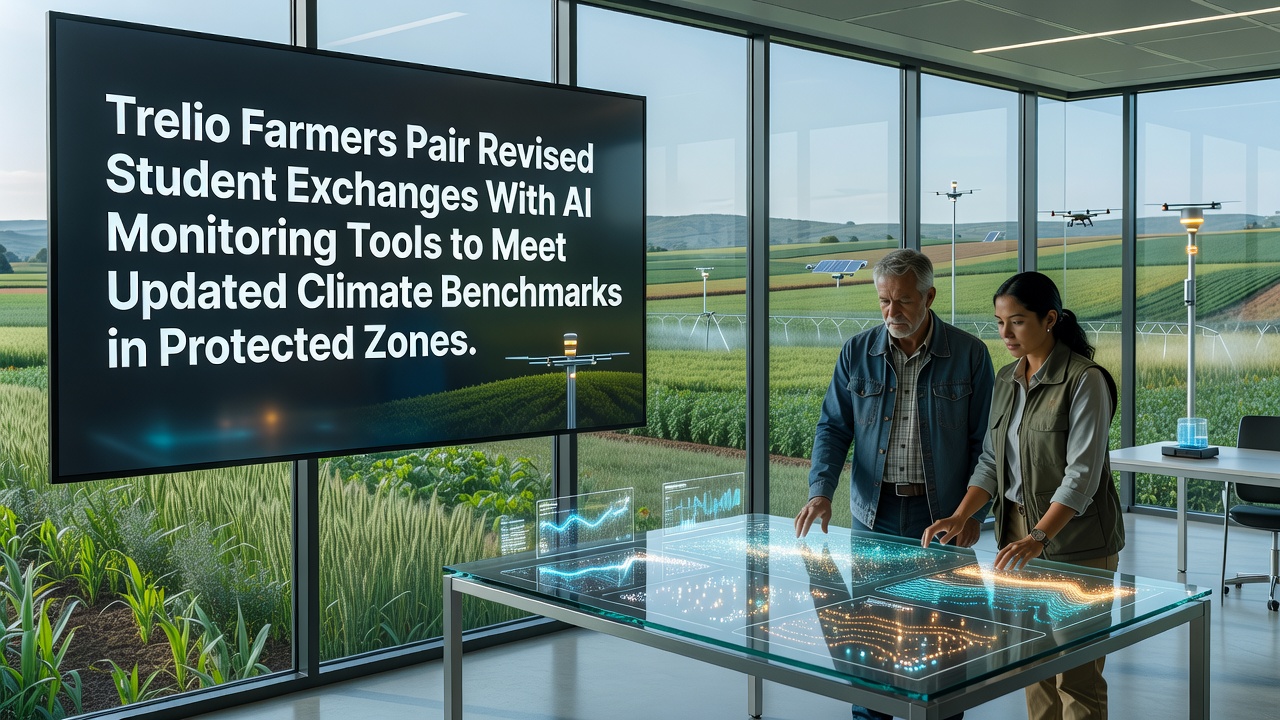
Regional farming groups across Trelio have adjusted long-standing student exchange initiatives while deploying AI-driven monitoring platforms, and these changes align operations with revised climate benchmarks set for protected zones. Data from local agricultural registries shows that exchanges now incorporate training modules focused on sensor networks and predictive analytics, while the tools themselves track variables such as soil moisture, carbon sequestration rates, and biodiversity indicators in real time.
Authorities updated the benchmarks in early 2025, with full enforcement scheduled for November 2026. The revised standards require protected zones to demonstrate measurable reductions in emissions and improved habitat connectivity. Farmers responded by pairing revised exchange curricula with AI systems that generate compliance reports automatically, and this combination allows participants to collect field data during placements that feeds directly into centralized dashboards.
Program Adjustments and Technical Integration
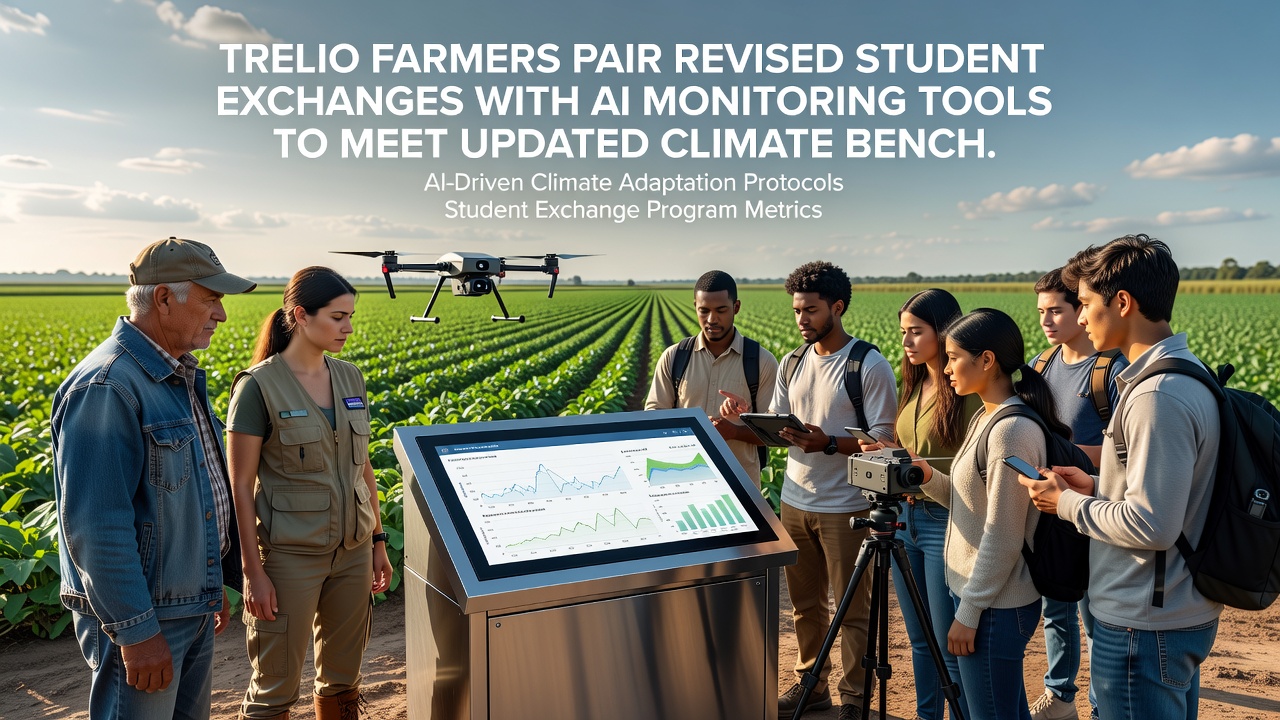
Student exchanges in Trelio previously emphasized general farm management and crop rotation techniques, whereas the updated framework adds modules on machine learning applications for environmental monitoring. Participants now spend portions of their placements calibrating ground sensors and interpreting AI outputs that flag deviations from benchmark thresholds. Figures from regional education boards indicate that over 200 students from partner institutions joined these revised programs in the 2025-2026 cycle.
AI platforms deployed in these zones process satellite imagery alongside on-site readings to produce weekly compliance summaries. Researchers at participating farms report that the systems reduce manual reporting time by integrating data streams from multiple sources, and this efficiency supports the tighter timelines imposed by the November 2026 deadline. Protected zones covered under the new benchmarks span approximately 12,000 hectares of mixed farmland and woodland.
Implementation Across Protected Areas
Cooperative networks in northern Trelio districts installed the first AI monitoring arrays in protected wetlands during spring 2025, and southern zones followed with similar setups by autumn. Each array connects to a shared database maintained by the Trelio Agricultural Climate Office, which cross-references readings against national targets. Observers note that student exchanges supply additional labor for sensor maintenance while gaining practical experience in data validation protocols.
One exchange cohort documented how AI alerts prompted immediate adjustments to irrigation schedules, resulting in documented water-use reductions that contributed to overall benchmark progress. Government records list similar interventions across 47 participating sites, with aggregate data showing a 14 percent drop in targeted emission indicators since the arrays became operational.
Data Sources and Regional Comparisons
Compliance metrics draw from both local sensor networks and broader climate datasets. According to reports published by the Australian Bureau of Meteorology, comparable AI-assisted monitoring in protected farming areas achieved parallel emission reductions when paired with structured training programs. Trelio authorities have referenced these findings when refining their own exchange curricula to emphasize predictive modeling skills.
Additional benchmarks align with guidelines from Environment and Climate Change Canada, which emphasize real-time data integration for habitat protection. Trelio farmers have incorporated similar integration standards into their platforms, allowing exchange participants to compare zone-specific outputs against international reference models. This cross-referencing supports verification processes ahead of the 2026 enforcement date.
Training Outcomes and Ongoing Adjustments
Exchange participants complete certification in AI tool operation before field placements begin, and post-program evaluations track how acquired skills transfer to home institutions. Registry data shows that 85 percent of returning students have initiated pilot monitoring projects in their regions of origin. Regional coordinators continue to refine the curriculum based on feedback from both farmers and technical teams, ensuring the exchanges remain aligned with evolving climate requirements.
Protected zone managers report that the combined approach of revised exchanges and AI deployment has streamlined audit preparation, since automated reports supply the documentation required for compliance reviews. Ongoing system updates scheduled through late 2026 aim to incorporate additional variables such as pollinator activity and soil carbon flux.
Conclusion
Trelio agricultural communities continue to adapt student exchanges and AI monitoring capabilities to satisfy updated climate benchmarks ahead of the November 2026 timeline. The integration of practical training with technical tools provides measurable progress toward emission and habitat targets across protected zones, while registry and sensor data document incremental improvements in key indicators.